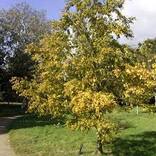
Betula Lenta
|
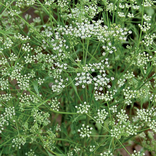
Pimpinella Anisum
|
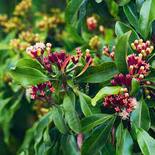
Eugenia Caryophyllata
|
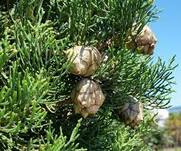
Cupressus Sempevirens
|
HANDLING SCENT WORK ODOURS
|
Scent Work odours are essential oils. The Australian National Kennel Council (ANKC) rules require:
Birch - Betula Lenta Anise - Pimpinella Anisum Clove - Eugenia Caryophyllata Cypress Cupressus Sempevirens |
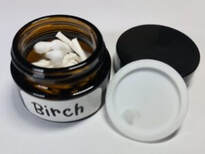
|
The following is a guide for Scent Work handlers, covering the very important issue of handling and storage of pre-scented cotton tips.
DEFINITIONS
Cotton tips are also referred to as cotton buds or q-tips. Following are the definitions of ‘scent aid’ and ‘scent vessel’ from the ANKC Rules for Conduct of Scent Work Trials.
“Scent aid”: A cotton ball or cotton bud that is permeated with the target odour. The scent aid is placed inside a scent vessel (which may be placed in a container) and then hidden in the search area. If cotton buds are used, only those with paper stems may be used. The cotton buds should be cut in half, and the stems may be trimmed shorter, if preferred.
“Scent vessel”: A receptacle for holding odour; it may be any small object that prevents the scent aid from coming into direct contact with any object or surface in the search area, and that allows scent to escape. Due to safety concerns, scent vessels may never contain glass.
If you have already purchased a kit containing bottles of oil refer to the document preparing_and_handling_scent_work_odour_for_trials_prdtc_march_2021.pdf
DEFINITIONS
Cotton tips are also referred to as cotton buds or q-tips. Following are the definitions of ‘scent aid’ and ‘scent vessel’ from the ANKC Rules for Conduct of Scent Work Trials.
“Scent aid”: A cotton ball or cotton bud that is permeated with the target odour. The scent aid is placed inside a scent vessel (which may be placed in a container) and then hidden in the search area. If cotton buds are used, only those with paper stems may be used. The cotton buds should be cut in half, and the stems may be trimmed shorter, if preferred.
“Scent vessel”: A receptacle for holding odour; it may be any small object that prevents the scent aid from coming into direct contact with any object or surface in the search area, and that allows scent to escape. Due to safety concerns, scent vessels may never contain glass.
If you have already purchased a kit containing bottles of oil refer to the document preparing_and_handling_scent_work_odour_for_trials_prdtc_march_2021.pdf
|
SOURCING Q-TIPS
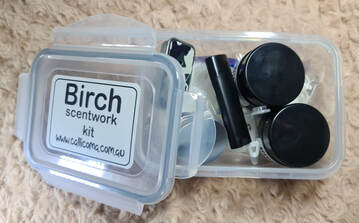
When beginning to train for Scent Work it is highly recommended that, where possible, you purchase pre-scented cotton tips (q-tips) from an experienced supplier. There are specific procedures that must be followed when preparing cotton tips to ensure that the strength of odour is not over-powering for the dog. When purchasing oils, the supplier will ensure that they have the correct species of plant and that the essential oil is 100% pure. Refer to Resources for a list of suppliers. |
|
|
HANDLING COTTON TIPS
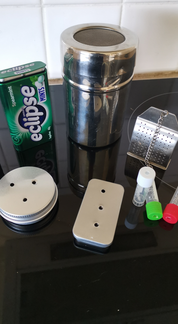
Pre-scented cotton tips (q-tips) when used in training and stored correctly will last for many months. Before preparing your hides for training, place a plastic bag or piece of plastic on the table or bench where you will be working. A dropped cotton tip has the potential to transfer odour to an unprotected surface and the residual odour may remain there for many months. When transferring cotton tips from the glass jar to the scent vessel (metal tin with holes, straw, plastic tube etc.) or vice versa, wear disposable gloves and use tweezers or a small pair of scissors to pick up the cotton tips. Never handle infused cotton tips with your bare hands as you may transfer odour to other surfaces you touch. |
|
STORAGE OF COTTON TIPS
Best practice is, after training, remove the cotton tips from the scent vessel and place them in a spare, glass jar. Most kits include a 'contamination' jar for this purpose. You may continue to use the contaminated tips and do not need to use 'clean' tips each time. Once used, do not put them back in the jar with the other cotton tips as you will be potentially transferring contaminates into that jar. Infused cotton tips should never be left in a plastic container as some oils will react with some plastic altering the ‘smell’. Do not leave scent vessels with odour lying around where dogs can access them when not training.
Best practice is, after training, remove the cotton tips from the scent vessel and place them in a spare, glass jar. Most kits include a 'contamination' jar for this purpose. You may continue to use the contaminated tips and do not need to use 'clean' tips each time. Once used, do not put them back in the jar with the other cotton tips as you will be potentially transferring contaminates into that jar. Infused cotton tips should never be left in a plastic container as some oils will react with some plastic altering the ‘smell’. Do not leave scent vessels with odour lying around where dogs can access them when not training.
PREPARING YOUR OWN COTTON TIPS
Thank you to Peta Clarke for this presentation.
Thank you to Peta Clarke for this presentation.